
Introduction
Table of Contents
ToggleThe effects of sleep deprivation on the brain are far more frightening than feeling tired or lazy.
Just one sleepless night can trigger a chain reaction inside your brain that affects memory, emotional balance, focus, and long-term mental health.
Let’s understand what really happens and why sleep is the brain’s most powerful repair tool.
1. Your Brain Works Nonstop—and It Creates Waste
All day long, the brain uses billions of neural connections to think, decide, move, and manage emotions.
During this process, waste, toxins, and damaged cells build up.
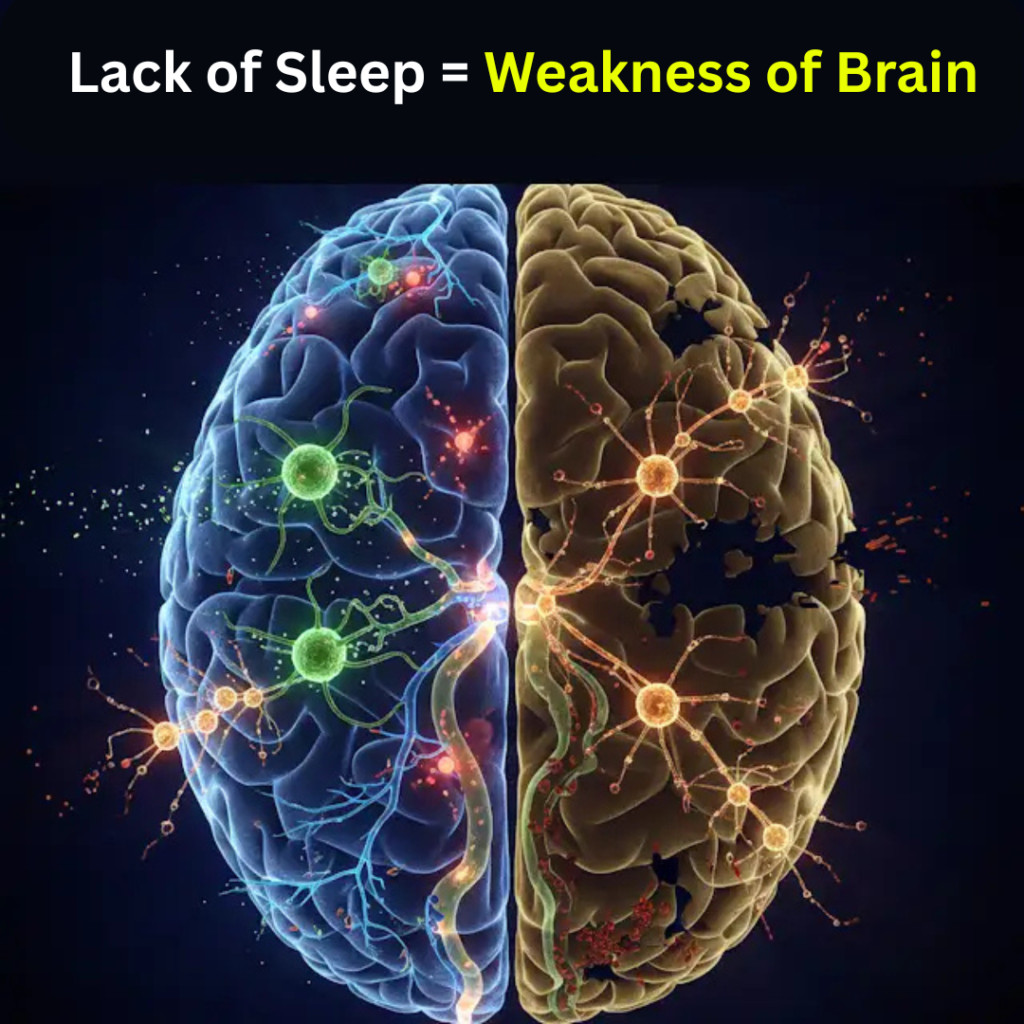
One of the most important effects of sleep deprivation on the brain is that this waste does NOT get removed properly.
2. Deep Sleep: The Brain’s Cleaning and Detox Time
Deep sleep is not rest—it is maintenance time.
During deep sleep:
-
Microglial cells clean dead and damaged cells
-
Astrocytes remove old, weak neural connections
-
The glymphatic system flushes out toxins
This “brain detox” protects your memory and thinking speed.
When sleep is missing, the detox process fails—one of the major effects of sleep deprivation on the brain.
3. When You Don’t Sleep, the Brain Enters Survival Mode (Detailed Explanation)
When you don’t get enough sleep, your brain immediately senses danger.
Sleep is not optional for the brain—it is a biological necessity.
So the moment sleep is reduced, the brain activates a survival mode to protect your body and keep you functioning.
But this survival mode comes with hidden costs.
🧠 What Happens In Survival Mode?
1. The brain starts shutting down “non-essential” functions
Just like a phone switching to low power mode, the brain reduces activities that require high energy, such as:
-
Deep thinking
-
Focus and attention
-
Creativity
-
Decision-making
-
Emotional control
Your brain is awake, but it’s not working at full capacity.

2. Stress hormones increase
Lack of sleep triggers a rise in cortisol, the stress hormone.
This makes you feel:
-
Anxious
-
Irritated
-
Overwhelmed
-
Emotionally unstable
This is why people become short-tempered and sensitive when they are sleep deprived.
3. The amygdala becomes overactive
The amygdala, the emotional center of the brain, becomes highly reactive.
As a result:
-
Small problems feel big
-
Emotions become uncontrollable
-
Anger, sadness, or fear occur more easily
This is your brain’s way of trying to protect you from threats—but it misfires.
4. The prefrontal cortex slows down
The prefrontal cortex is the part of the brain responsible for logic, planning, and judgment.
When sleep is low, this area becomes weak, leading to:
-
Poor decisions
-
Low concentration
-
Confused thinking
-
Difficulty solving problems
This is why even simple tasks feel extra hard without sleep.
5. Energy is diverted only to essential operations
To save energy, the brain supports only the functions needed for survival, such as:
-
Breathing
-
Heart rate
-
Basic reflexes
-
Basic movement
Everything else runs on “minimum power.”
6. The brain treats lack of sleep like physical danger
Biologically, the brain cannot differentiate between:
-
Being chased by danger
-
Not sleeping
Both are seen as threats to survival.
So the brain responds by:
-
Heightening alertness
-
Increasing stress
-
Reducing repair processes
-
Entering “fight or flight” mode
This makes the brain extremely active—but in the wrong way.
🧠 Why Survival Mode Is Dangerous
Survival mode is not designed for long-term use.
It is meant for short emergencies.
When you keep losing sleep, this emergency mode continues daily, and the brain:
-
Stops detoxing itself
-
Stops repairing cells
-
Starts damaging healthy neural connections
-
Becomes inflamed
-
Burns out faster
This is where long-term harm begins.
🧠 Result: You function… but poorly
You still:
-
wake up
-
walk
-
talk
-
work
But everything feels slow, heavy, and emotionally unstable.
Your performance drops while your stress rises.
This is the hidden danger of the effects of sleep deprivation on the brain—
you don’t collapse immediately,
but you slowly lose clarity, memory, emotional balance, and creativity.

4. The Most Dangerous Effect: The Brain Starts Destroying Healthy Cells
When sleep deprivation becomes frequent, the brain begins a harmful process called Astrocytic Phagocytosis.
This means:
-
The brain starts breaking healthy neural connections
-
Active pathways used for thinking and memory get damaged
-
Communication between brain cells slows down
This is one of the most damaging effects of sleep deprivation on the brain—your brain literally starts “eating” itself.
5. Daily Life Problems Caused by Lack of Sleep
Some of the most common effects of sleep deprivation on the brain include:
-
Weak short-term memory
-
Low focus and concentration
-
Slow thinking and reaction time
-
Emotional instability
-
Irritability and mood swings
-
Increased inflammation
-
Poor decision-making
-
Higher risk of Alzheimer’s and dementia
These problems don’t appear overnight—but they grow quietly and steadily.
6. The Good News: The Brain Repairs Itself When You Sleep
The positive effects of good sleep on the brain are powerful.
With proper sleep:
-
Neural connections rebuild
-
Brain flexibility (neuroplasticity) improves
-
Toxins and waste get cleaned
-
Memory becomes stronger
-
Emotions become stable
-
Learning becomes easier
-
Focus increases
Sleep is the brain’s daily repair, protection, and reset system.
Conclusion
The effects of sleep deprivation on the brain are real, dangerous, and often invisible.
But the solution is simple: consistent, deep sleep.
When you sleep well, you don’t just rest…
you give your brain new life.

Also Read our Article on : 7 Powerful Benefits of Dates: A Simple Fruit That Can Boost Your Daily Energy
Follow our Facebook page : Digitalurdu


